GA-RANKUWA — Nursing students from Sefako Makgatho Health Sciences University (SMU) are taking hypertension awareness and preventive healthcare beyond the university campus, using community outreach to promote early detection and healthier lifestyles.
The initiative forms part of SMU’s efforts to combine health sciences education with community engagement. The university’s Nursing Science Department identifies community based education as an important part of preparing students to care for patients, families and communities.
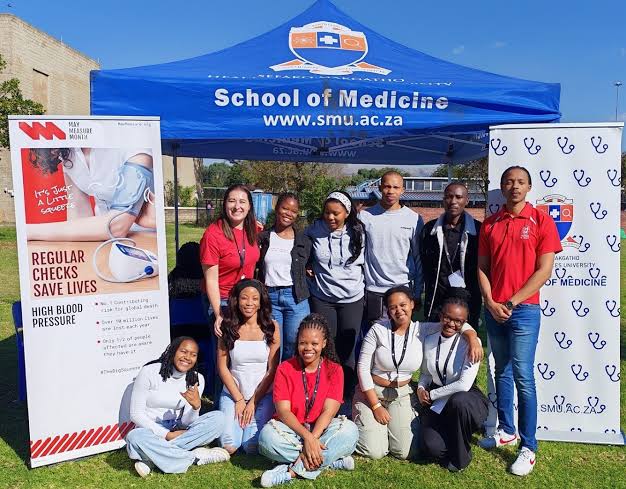
In May 2026, SMU also participated in the global May Measurement Month campaign with Dr George Mukhari Academic Hospital, conducting blood pressure screenings and awareness activities around the university and the surrounding Ga-Rankuwa community.
The campaign reached 365 people, including students, staff, patients and community members. Participants received blood pressure assessments and information about hypertension risk factors, prevention, treatment adherence and the importance of regular monitoring.
Hypertension is often called a “silent killer” because people can have high blood pressure without obvious symptoms. SMU’s campaign therefore focuses on screening and education to encourage people to know their blood-pressure status and take preventive action.
The university’s July community outreach also involved Postgraduate Diploma in Occupational Health Nursing students, who marked World Hypertension Day through a health promotion and awareness programme at the Itireleng Residential Facility for the Disabled.
The programme was organised under the guidance of Miss Lerato Manyeneng, a lecturer in the PGDip Occupational Health Nursing programme. SMU said the initiative gave students practical experience while educating participants about preventing, detecting and managing hypertension.
Miss Manyeneng emphasised the importance of prevention and early detection in addressing non-communicable diseases.
“Prevention remains one of the most effective strategies in addressing non-communicable diseases such as hypertension.”
She also said nursing students have a responsibility to promote health and wellbeing in communities and workplaces.
For the students, the campaign provides an opportunity to apply knowledge gained through their studies in real community settings. SMU said the outreach allowed students to translate classroom learning into practical interventions involving health education, advocacy and community engagement.
The university’s Department of Nursing Science says its training incorporates community based education and aims to develop nurses capable of providing holistic care to communities.
The campaign also highlights the role of universities in addressing public health challenges while giving students experience outside traditional clinical environments.
The Ga-Rankuwa Times contacted the relevant SMU faculty/department for additional comment on the campaign, including its community reach, the role of nursing students and how the experience contributes to their training. No response had been received by the time of publication.
For Tshwane residents, the campaign brings preventive health education and screening closer to communities, while for nursing students it provides an opportunity to put their training into practice and engage directly with the people they will eventually serve.