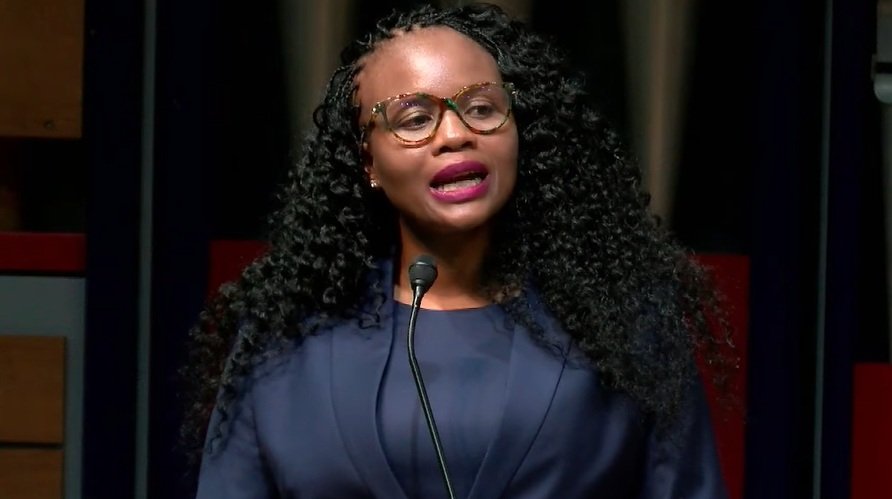
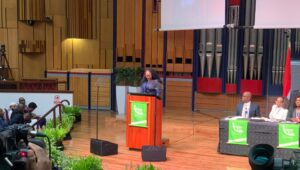
On Thursday, April 16, the University of South Africa’s (UNISA) iconic ZK Matthews Great Hall in the Winnie Madikizela-Mandela Building at the Muckleneuk Campus in Pretoria buzzed with anticipation as Executive Mayor Dr Nasiphi Moya of the City of Tshwane delivered her State of the Capital Address (SoCA) during a special council sitting. The address outlined progress made, confronted ongoing challenges, and charted a way forward for the City of Tshwane.
Hosted in partnership with UNISA, the SoCA reflected the municipality’s commitment to engaging broader communities and leveraging academic partnerships for innovation and development. Mayor Moya, representing a multiparty coalition government comprising the ANC, EFF, IFP, COPE, AIC, DOP, PA, ATM, PAC, ActionSA, and GOOD, framed the address around the theme “Rebuilding a Culture of Service.” The Mayor emphasized unity across political lines to restore trust and improve the daily lives of Tshwane residents.
Opening the SoCA, Mayor Moya highlighted how the coalition has put aside its differences to focus on practical governance. “This coalition brings together different ideologies, voices and perspectives and reflects a shared commitment to improving the daily lives of our residents and restoring trust in this City,” she said.
The administrative work of the City revolves around six priorities of the SoCA: financial stability and revenue enhancement; economic revitalisation and investment attraction; infrastructure development and service delivery; a safe and clean city; social services and community well-being; and strengthening governance and customer care.
These priorities recognise that a capable city needs integrated systems and financial health to enable growth, which depends on reliable infrastructure, safety, social support, and accountable governance.
The Mayor acknowledged the city’s vulnerable infrastructure, including old water pipes dating back about 50 years, which are causing water losses and contamination. “The City of Tshwane has no water challenges, but the challenges faced are water losses caused by old infrastructure that also causes water to be dirty,” said the Mayor.
To combat infrastructure issues across the city, from Pretoria Central to surrounding areas such as Soshanguve, Ga-Rankuwa, and Mamelodi, the City launched a Water Stabilisation Plan, replacing over 28 km of pipes and investing R2 billion in water and sanitation. The City also rolled out an Electricity Stabilisation Plan, with upgrades at the Kwagga Substation, Watloo Substation, and the Wildebees Infeed Station.
During a press conference, Mayor Moya addressed concerns about failing to attend a Hammanskraal community meeting on April 13. “Because of the scale of unhappiness, we agreed to meet the community on Monday, after we had already committed to meeting the informal traders. The informal traders meeting was supposed to end at 4, but it did not,” she explained.
The community expressed unhappiness over her absence. Mayor Moya added, “What will happen now is that on Saturday we are taking the IDP meeting to Hammanskraal with the MMC, and we may have to ask for more time so that we can address the issues of water, but we need more days in Hammanskraal.”
Amid the many challenges faced by the city — including Eskom debt, the rise in informal settlements, and concerns about electricity and water infrastructure, Mayor Moya’s address reflected steady progress in a difficult environment. She positioned Tshwane as a standout exception among struggling metros, crediting the City of Tshwane’s coordinated coalition governance.