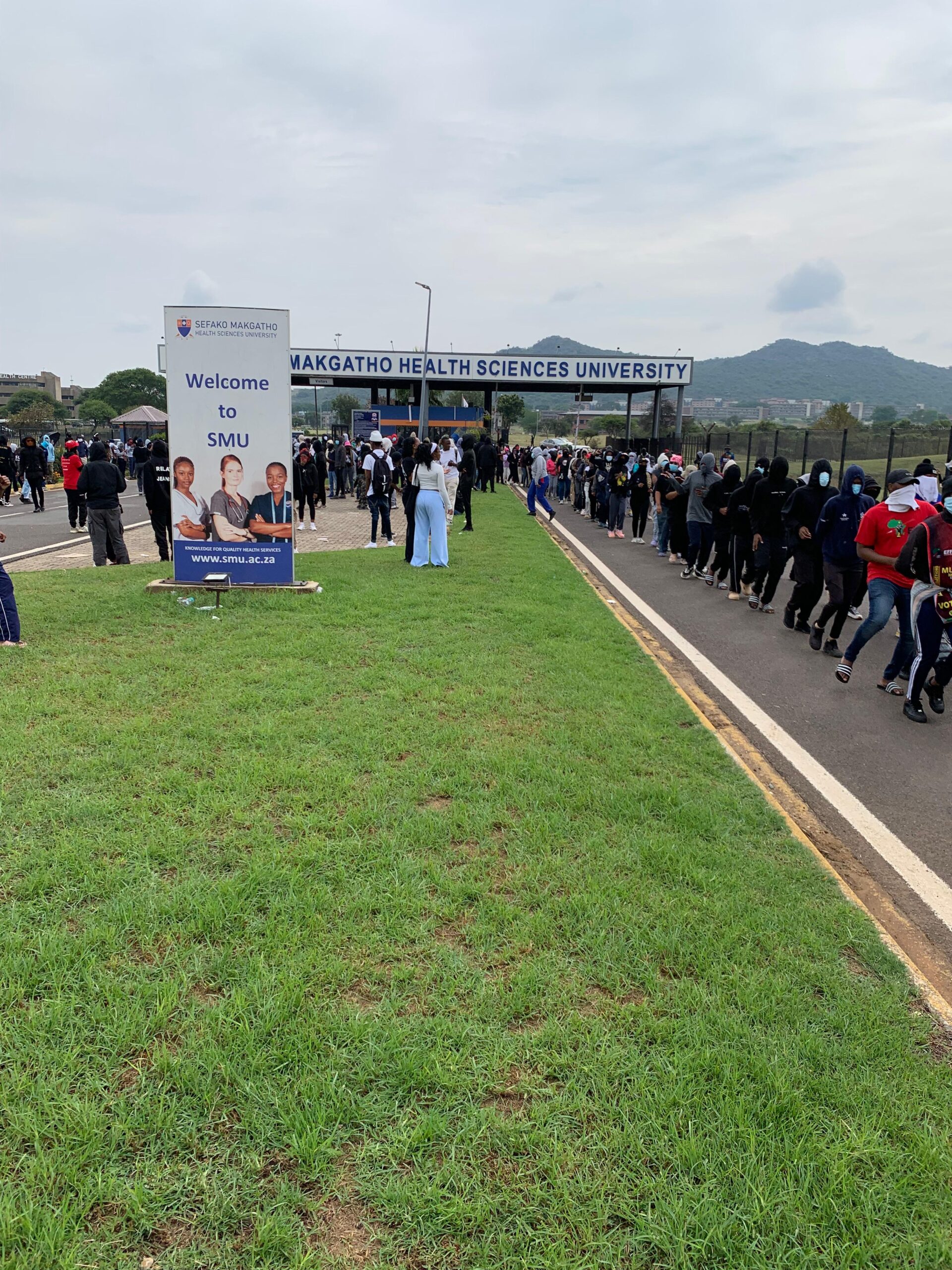
After the march at Sefako Makgatho Health Sciences University (SMU), the students expressed the challenges they continue to face due to the institution’s inaction. The students continue to live with unanswered demands that they have submitted to the university for resolution.
On April 15, the students of SMU held a protest at the institution’s gates to present a list of demands. The issues on the list included concerns about infrastructure, water outages, poor Wi-Fi, and the high prices of the residence known as “Two Thousand Beds.”
The students expressed their dissatisfaction with how the institution has handled these matters. Although the issue of water outages has been addressed, many problems remain unresolved. Students have complained about the high costs of residence, stating that the fees are excessive and that the institution should reconsider the pricing. Additionally, poor Wi-Fi connectivity has hindered their ability to fully access online materials.
“They told us about the old water infrastructure and said that maintenance would be done at night to avoid disturbing students and classes. However, there has been no communication regarding Wi-Fi and cafeteria prices,” said a SMU student who did not want to be named.
He said the remaining student demands seem to have fallen on deaf ears, as there has been no communication about when these issues will be addressed. Instead, the Student Representative Council (SRC) was informed that suspension letters would be issued if the strike occurred again.
“As much as we are not pleased, we have little power at this moment. We can only hope that they will recognise what needs to be done,” stated a concerned student.
Fearing suspension, the students feel compelled to endure their current situation, hoping that the little progress they have achieved will lead to further improvements.
Many students expressed dissatisfaction with the institution’s decisions. “Yes, we appreciate the initiative to reduce the water outages, as that was our major concern, but that doesn’t mean the other issues are of less importance,” the student added.
Attempts to contact the institution for comment on these issues were unsuccessful; phone calls were repeatedly dropped, and emails sent to the addresses provided on the website went unanswered.
This is a developing story.